


Understanding Medical Abortion
Medical abortion is a method of ending a pregnancy using medication without the need for surgery or other invasive procedures. The medications used are Mifepristone and Misoprostol. The World Health Organization (WHO) recognizes medical abortion as a safe and effective method when used according to medical indications and under the supervision of qualified healthcare professionals.
How Do the Medications Work?
– Mifepristone works by blocking the action of progesterone, a hormone that is essential for maintaining pregnancy. As a result, the pregnancy cannot continue, and the cervix begins to soften.
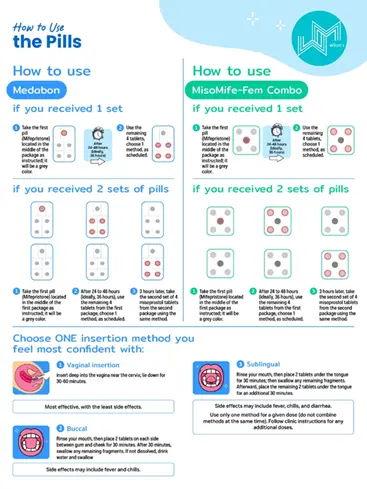
– Misoprostol primarily stimulates uterine contractions, helping expel the pregnancy tissue from the uterus. It is generally administered 24–48 hours after taking Mifepristone to maximize its effectiveness. Misoprostol can be administered through several routes, including vaginal administration, buccal administration (placed between the cheek and gum), and sublingual administration (placed under the tongue).
Medication Regimens
- Combination Regimen (Mifepristone + Misoprostol)
This is the standard regimen and has the highest effectiveness. It begins with taking Mifepristone, which blocks progesterone and stops the pregnancy from progressing. Misoprostol is then taken approximately 24–48 hours later to stimulate uterine contractions and expel the pregnancy tissue.
The combination regimen has a success rate of approximately 95–99% for pregnancies up to 9 weeks of gestation and remains highly effective for pregnancies between 9 and 12 weeks, although some individuals may require additional doses of Misoprostol.
- Misoprostol-Only Regimen
When Mifepristone is unavailable or cannot be used, Misoprostol alone can be used to induce uterine contractions and expel the pregnancy tissue. Although this regimen is effective, its success rate is slightly lower than the combination regimen, ranging from 80–95%, depending on gestational age and adherence to the recommended treatment protocol.
Common Side Effects
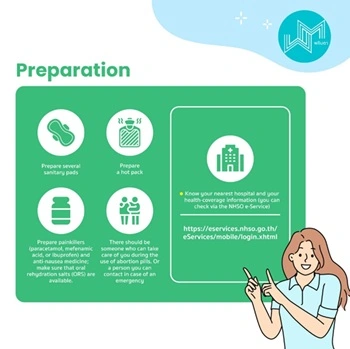
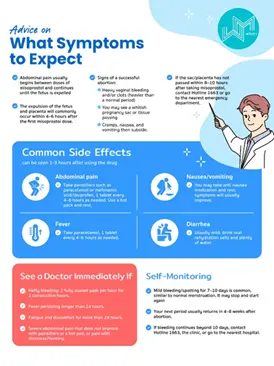
After taking the medication, individuals may experience uterine cramping, vaginal bleeding, nausea, vomiting, diarrhea, mild fever, or chills. These are common side effects and usually resolve on their own within a short period. Symptomatic medications, such as pain relievers to relieve cramping, fever-reducing medications for fever, and anti-nausea medications for nausea, may be used to help manage these symptoms. In addition, applying a hot water bottle or a heating pad to the lower abdomen may help relieve uterine cramping and improve comfort.
However, medical attention should be sought immediately if any of the following occur:
- Heavy vaginal bleeding, such as soaking more than two sanitary pads per hour for two consecutive hours
- Severe abdominal pain that does not improve after taking pain medication
- A persistent high fever lasting more than 24 hours after taking the medication
- Green or yellow vaginal discharge with a foul odor
These symptoms may indicate complications that require prompt medical evaluation and treatment.
Medical abortion is a safe and effective method of ending a pregnancy when performed according to evidence-based medical guidelines and followed by appropriate follow-up care. Individuals experiencing unusual symptoms or who have concerns after taking the medication should seek advice from a healthcare professional promptly.
Prepared by: Manisawan Bourtone (Care & Counseling Officer)
References
- American College of Obstetricians and Gynecologists. (2020). Medication abortion up to 70 days of gestation (Practice Bulletin No. 225). Obstetrics & Gynecology, 136(4), e31–e47.
https://doi.org/10.1097/AOG.0000000000004082 - Kapp, N., Whyte, P., Tang, J., Jackson, E., & Brahmi, D. (2020). Medical termination for pregnancy in early first trimester (≤63 days) using combination of mifepristone and misoprostol or misoprostol alone: A systematic review. BMC Women’s Health, 20, 142.
https://doi.org/10.1186/s12905-020-01003-8 - World Health Organization. (2022). Abortion care guideline. World Health Organization. https://www.who.int/publications/i/item/9789240039483